Sky Spotter
Point your phone toward the sky and explore aircraft in the direction you are looking. Sky Spotter brings available flight labels, altitude and distance into a compass-driven view.
Explore Sky Spotter → AeroRadar Live
A fresh perspective on every flight
Discover aircraft on a live map, explore the world in 3D, and bring flight paths, airport activity and weather into view. AeroRadar Live puts the journey in your hands.
For Android. Public release is under Google Play review; availability may currently be limited to testers.
Discover what’s inside
From spotting an aircraft overhead to choosing your own app colors, explore the tools that make AeroRadar yours.
Point your phone toward the sky and explore aircraft in the direction you are looking. Sky Spotter brings available flight labels, altitude and distance into a compass-driven view.
Explore Sky Spotter →Bring airport, terminal and flight context together. Airport Pulse helps you explore official terminal guidance and available conditions for the part of the journey that matters to you.
Explore Airport Pulse →Turn recent recorded traffic into a moving picture of the sky. Nearby Sky Replay lets you revisit an area, pause a moment and follow how aircraft moved through it.
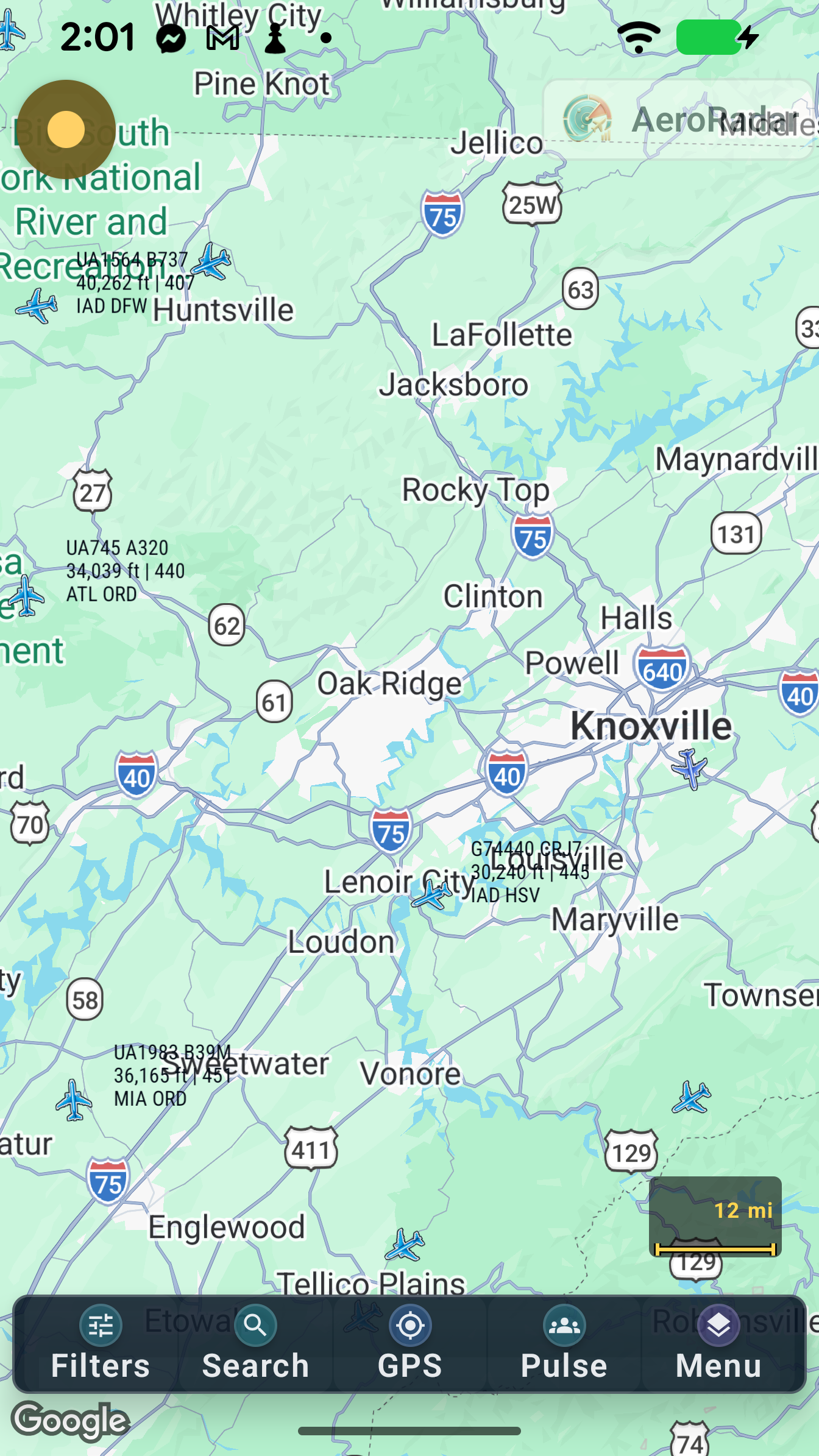
Explore Sky Replay →Shape the live 2D map around the aircraft you want to follow. Combine filters or start with a smart view to narrow the traffic already loaded on your map.
Explore Advanced filters →Recognize aircraft with airline-inspired palettes and distinct category colors. A searchable guide explains the colors used by both Google and OSM 2D maps.
Explore Color-coded aircraft →Choose a panel palette that suits you—from soft, light shades to deep night colors. Carry a consistent appearance across navigation, settings, dialogs and flight panels.
Explore Customized app skins →Keep a heading beside the map with a movable overlay, or open a full-screen compass with its own skins and motion controls.
Explore Magnetic compass →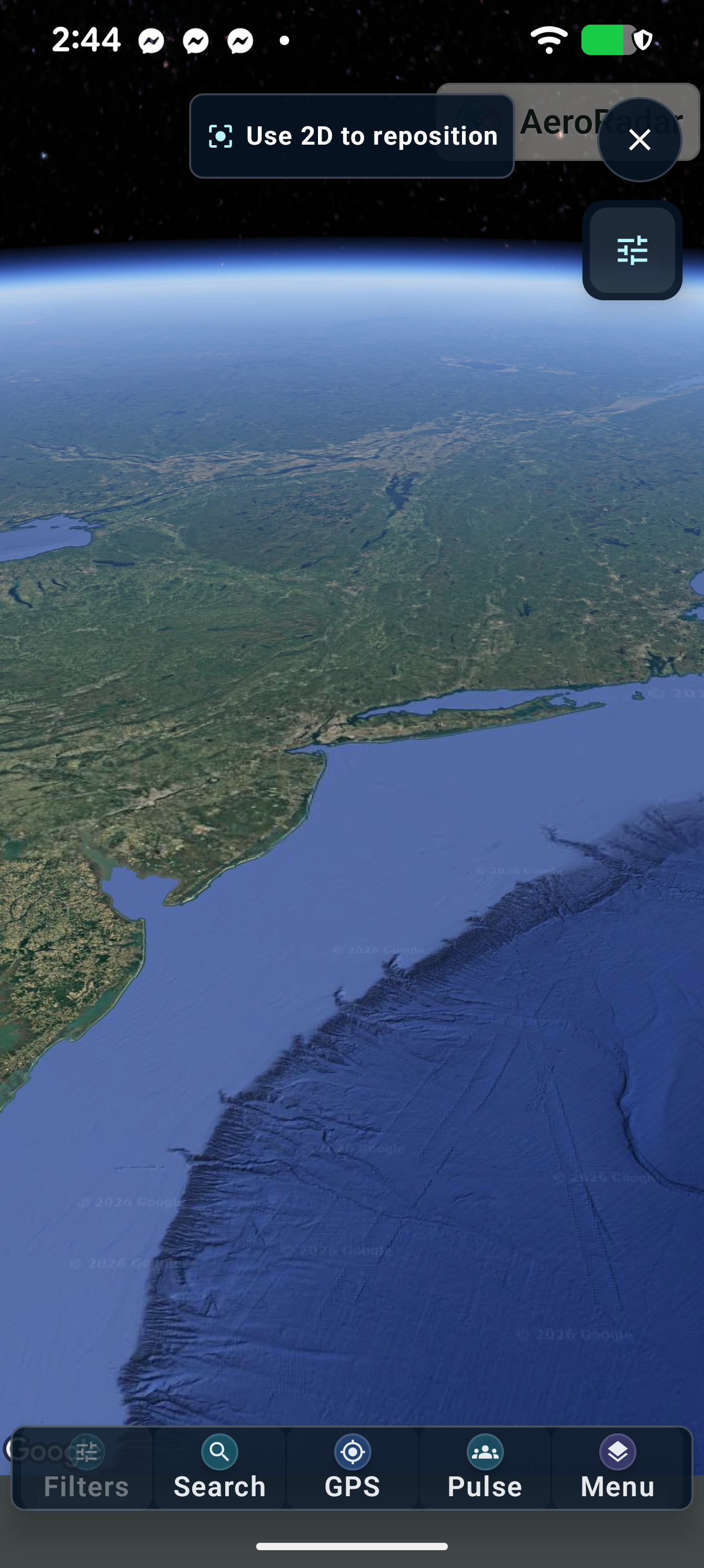
A different point of view
Switch between the familiar 2D radar and an immersive 3D globe. Explore places, find an airport, and keep the scenery in view with collapsible map controls.
Actual app captures. Flight positions and conditions shown are from the time of capture.
Find your flight in the app
Look up a flight number, airline, airport or route. In the app, optional voice and scan inputs help turn travel information into a search.
Examples of inputs, not live flight results. Available results depend on coverage.
Make AeroRadar yours
Adjust map layers, labels, units and display preferences. Choose your preferred language in the app settings.
Sign in to manage your AeroRadar access. Google Play handles Android subscription purchases; use Restore with the account used for the purchase.
Manage your subscription through Google Play. Request account deletion in the app or from our website, even without an active subscription.
Account & subscription help →Before you take off
A flight's position, history and route can come from different sources. Coverage or history may be unavailable for a particular aircraft. Missing information should not be treated as proof that a flight has stopped or changed route.
No. Manage or cancel billing in Google Play separately. Our account-deletion page explains the process and links to subscription management.
The current release is for Android. There is no public iOS release to announce.
Visit Help & support for sign-in, purchase, flight-data and account guidance.
For the curious. For the journey.